
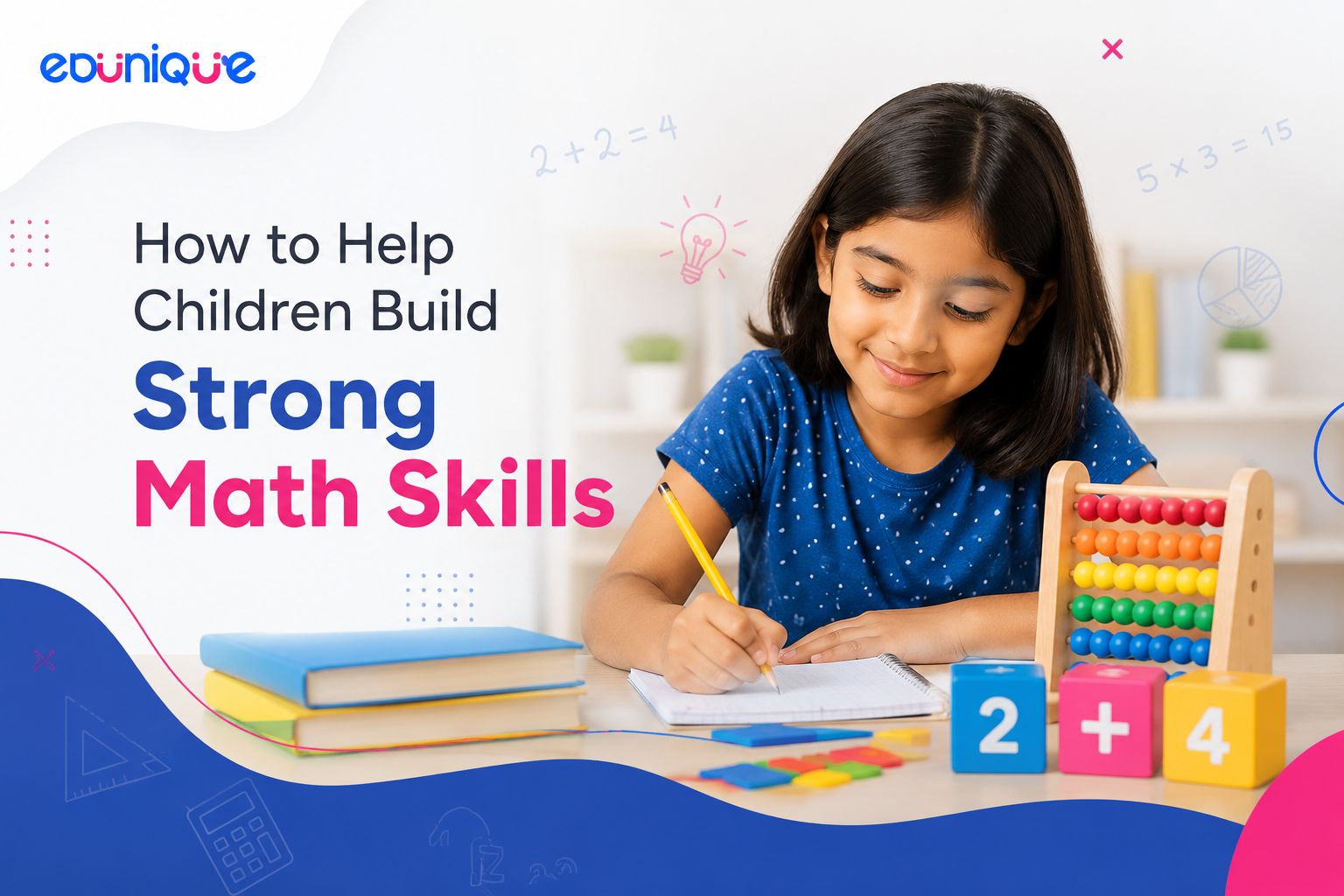
How to Help Children Build Strong Math Skills
Math is not about solving equations or remembering formulas. It is a way of thinking that helps children understand how to solve problems and feel confident when they face challenges. When children learn math from an age they are better prepared to understand harder concepts in school and use math to solve real-life problems.
However a lot of children struggle with math because they try to remember answers and understand how things work. With the way of learning, practicing regularly and getting help from parents, children can start to like math and get better at it.
Why Math is Important for Children
When children understand the basics of math they find it easier to learn topics later on. Of being scared of numbers they become more confident in solving problems on their own.
Math helps children in ways, such as:
- Improving their thinking and problem-solving skills
- Helping them make good decisions
- Making them feel more confident in school
- Doing better in tests and competitions
- Using math in their lives
- Becoming better at reasoning and making decisions
When children understand the basics, learning math becomes fun instead of stressful.
Start with Understanding Concepts
One mistake people make when learning math is memorizing formulas without understanding how they work.
Children should first learn about things like:
- Numbers and how they work
- Basic addition and subtraction
- Multiplication and division
- Decimals
- Measuring things
- Telling time and understanding money
- shapes and geometry
Instead of rushing through topics parents should help children understand why things work the way they do.
Make Math Part of Daily Life
Children learn faster when they see math being used in real-life situations.
Parents can show children how math is used in activities like:
- Counting fruits and vegetables when shopping
- Measuring ingredients when cooking
- Calculating change when buying things
- Reading clocks and calendars
- Measuring distances when traveling
- Comparing prices and finding discounts
These activities help children see that math is useful outside of school.
Help Children Get Better at Mental Math
Math helps children think faster, be more accurate and feel more confident.
Simple exercises like:
- Counting by twos. Fives
- Quick. Subtraction
- Multiplication tables
- Guessing games
- Number puzzles
can help children get better at math and rely less on calculators.
Use Pictures to Help Learn Math
Many children understand math better when they see pictures and visuals.
Helpful tools like:
- Number lines
- Abacus
- Blocks
- Fraction circles
- Charts
- Shapes
- Interactive diagrams
Can make math easier to understand and remember.
Practice Math Every Day
Math is like a skill that gets better with practice.If studying for a long time once a week parents should encourage children to practice math for 15-20 minutes every day.
Practicing every day helps:
- Improve accuracy
- Increase speed
- Build confidence
- Reduce stress before tests
Even doing a math problems every day can make a big difference over time.
Help Children Solve Problems
Being good at math is not about finding answers it is about understanding how to solve problems.
Parents should encourage children to:
- Read questions
- Break down big problems into smaller steps
- Draw pictures
- Look for patterns
- Try ways to solve problems
- Explain their thinking
These habits help children think critically and get ready for math.
Make Learning Math Fun
Children like learning when it feels like play.
Fun math activities like:
- Sudoku
- Number puzzles
- Card games
- Dice games
- Math bingo
- Board games that involve counting
- Online quizzes
can keep children motivated. Help them learn math naturally.
Find Out What Children Are Struggling With
Many children lose confidence because they move on to topics without mastering the basics.Parents should regularly check if children understand the basics before moving on to topics.If a child struggles with multiplication they will have trouble with fractions. If they do not understand place value they will have trouble with numbers.Finding and fixing these gaps early can prevent long-term problems in school.
Create a Positive Learning Environment
Children often get anxious about math because they are afraid of making mistakes.
Of just focusing on correct answers parents should:
- Appreciate effort
- Celebrate progress
- Encourage questions
- Not compare children
- Let them learn at their pace
A supportive environment helps children feel confident and curious.
Use Learning Approaches That Work for Each Child
Every child learns differently. Some understand concepts quickly with pictures while others need hands-on examples or one-on-one help.Modern learning platforms use technology and expert teaching to create learning experiences that match each child’s strengths and pace.
This approach helps children build math foundations and keeps learning engaging and fun.
How EduNique Helps Children Build Strong Math Skills
Building math skills requires more than traditional teaching methods. Children benefit from learning experiences that adapt to their abilities and learning styles.
EduNique offers a way of learning by combining smart AI-powered tools with expert human guidance. This approach helps recognize each child’s strengths and provides support both online and offline.
Of just memorizing formulas EduNique focuses on understanding concepts, developing skills practicing interactively and tracking progress. This helps children build confidence, understand math and develop problem-solving skills that support long-term academic success.
Conclusion
Strong math skills are the foundation for academic success and everyday problem-solving. By focusing on understanding concepts, practicing regularly using real-life examples and personalized learning parents can help children develop confidence and enjoy math from an age.With the guidance supportive learning environment and innovative platforms, like EduNique children can strengthen their math skills overcome learning challenges and build a solid foundation that benefits them throughout their educational journey.