Every Hard Problem Has Two Parts: Understanding It and Solving It
Here’s something that separates students who consistently perform well from those who plateau — they’re not just good at content. They’re good at thinking. They can look at a problem they’ve never seen before, break it down, identify what’s relevant, and reason their way to a solution.
That combination — mathematical precision and critical reasoning — is what every competitive exam, entrance test, and real-world challenge demands. And it’s almost never taught directly. Students are given content, given practice problems, but rarely given a framework for how to think about problems that don’t fit the template.
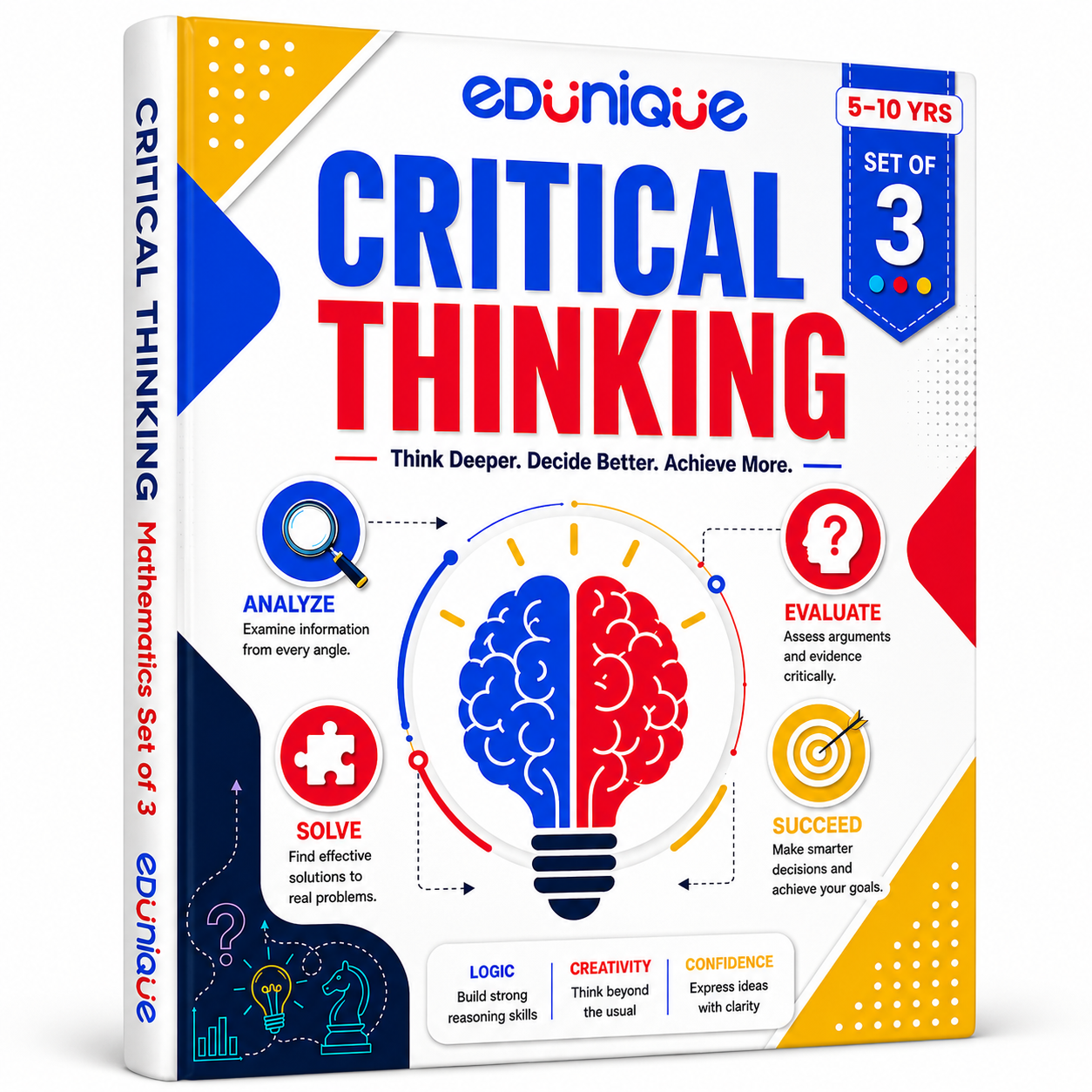
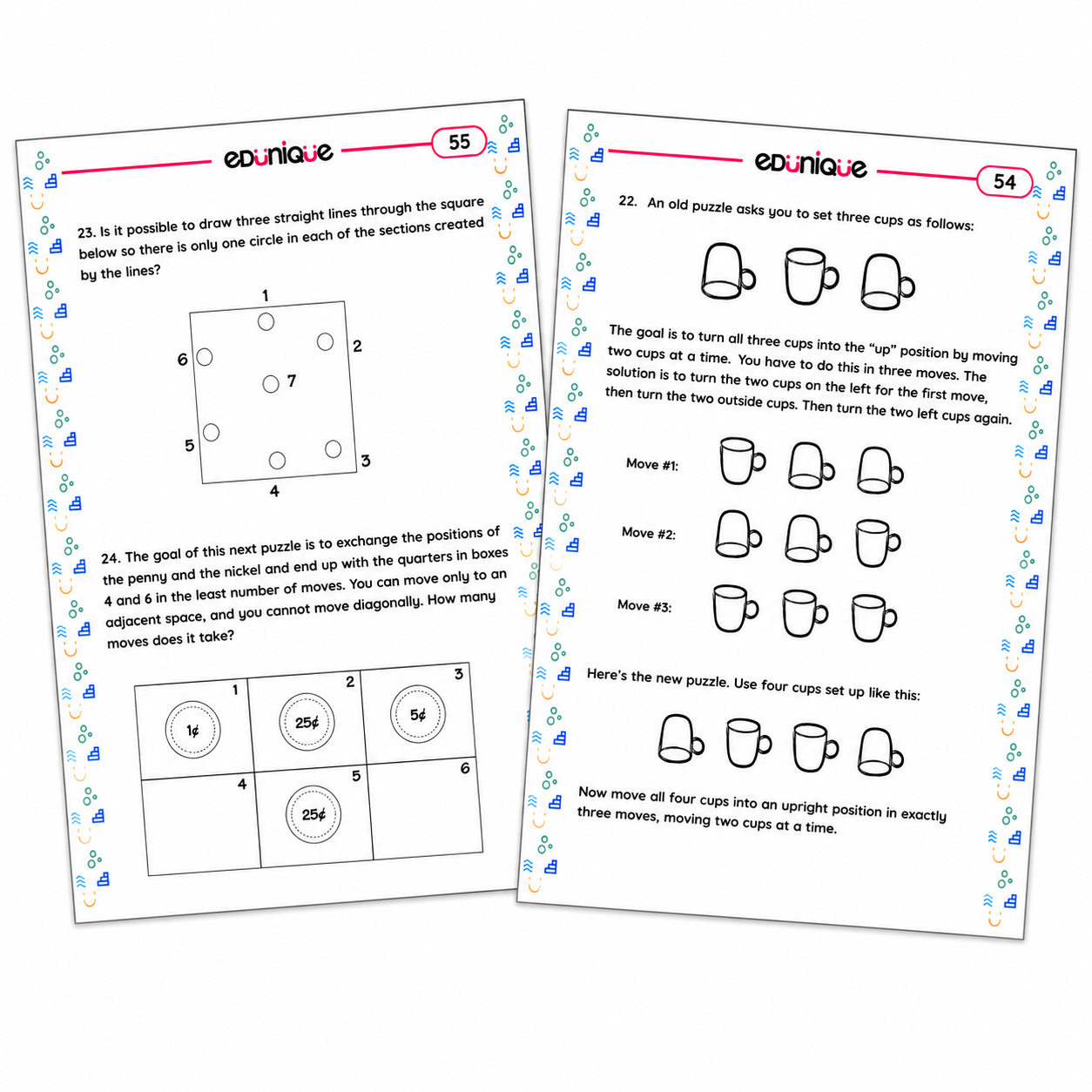
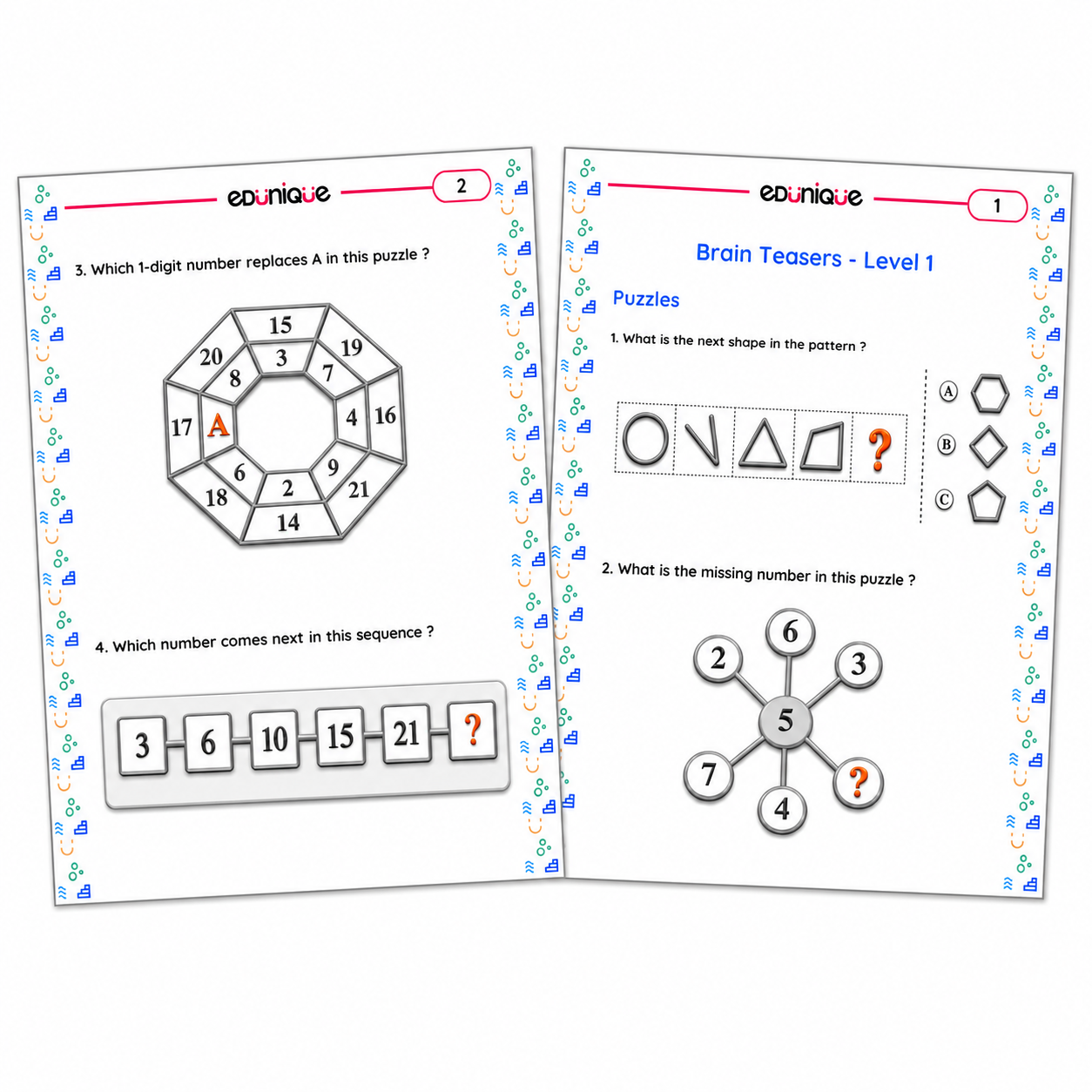
The EduNique Critical Thinking + Mathematics Set was built to provide exactly that framework. The Critical Thinking Book develops the reasoning layer — how to analyse information, question assumptions, identify flaws in arguments, and make structured decisions. The Mathematics books develop the precision layer — building numerical fluency, problem-solving skills, and the mathematical confidence to handle complex, multi-step problems.
Together, they produce something more valuable than either alone: a student who can think clearly and calculate accurately — in any setting, on any problem.
What’s Inside the Critical Thinking + Mathematics (3 in 1 book)
- Critical Thinking Book — covering logical reasoning, cognitive bias awareness, structured problem-solving, assumption spotting, and independent thinking (see full description on the Critical Thinking Book product page)
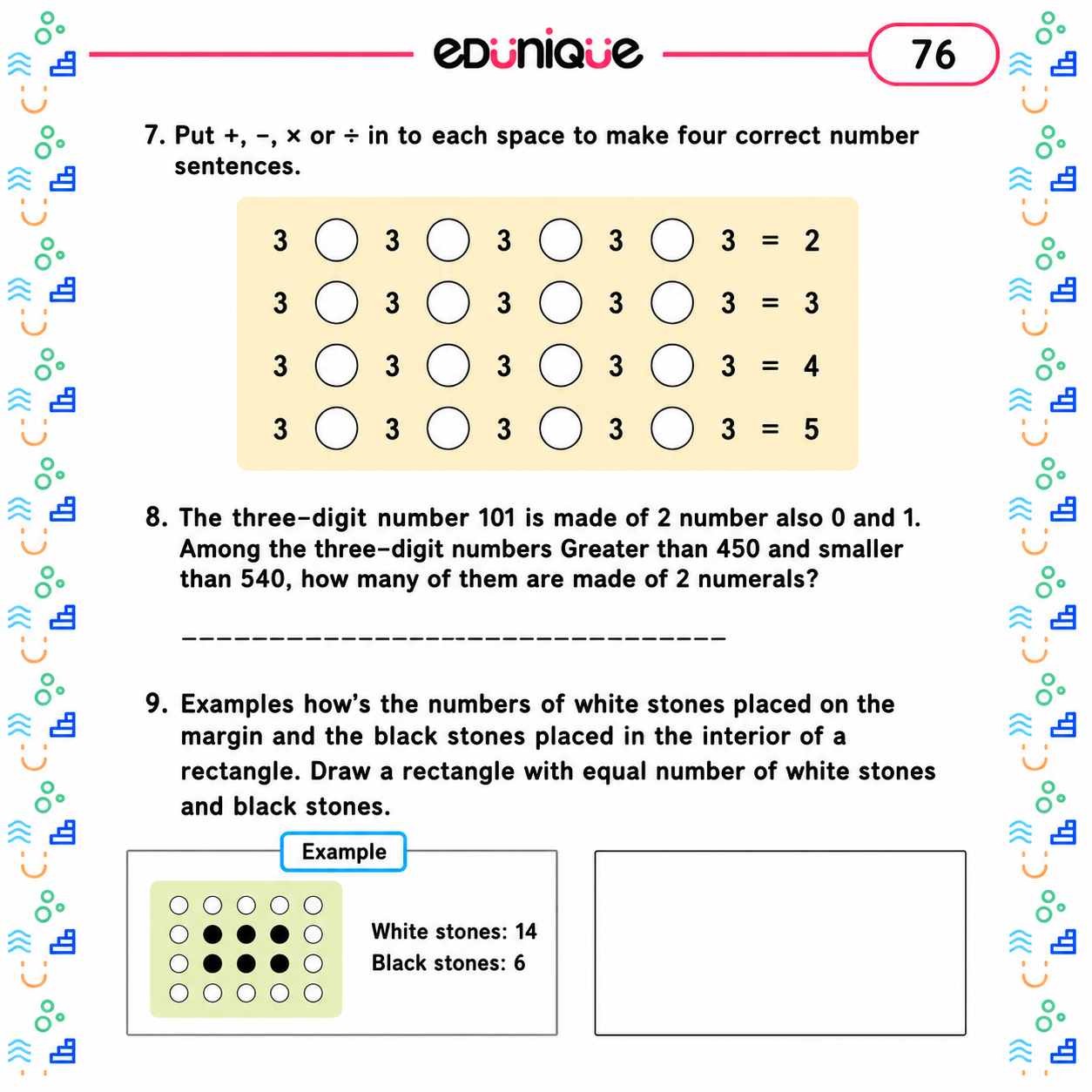
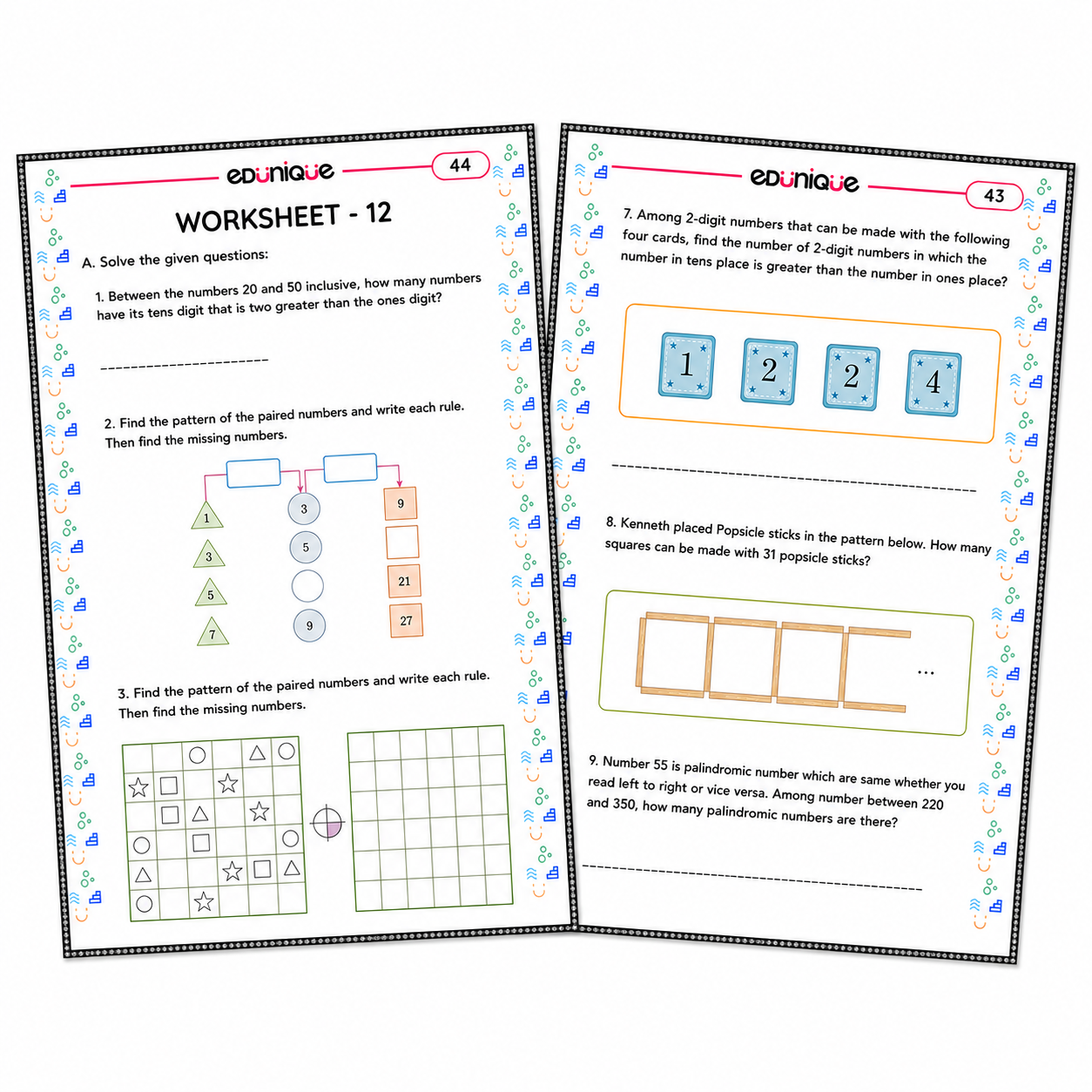
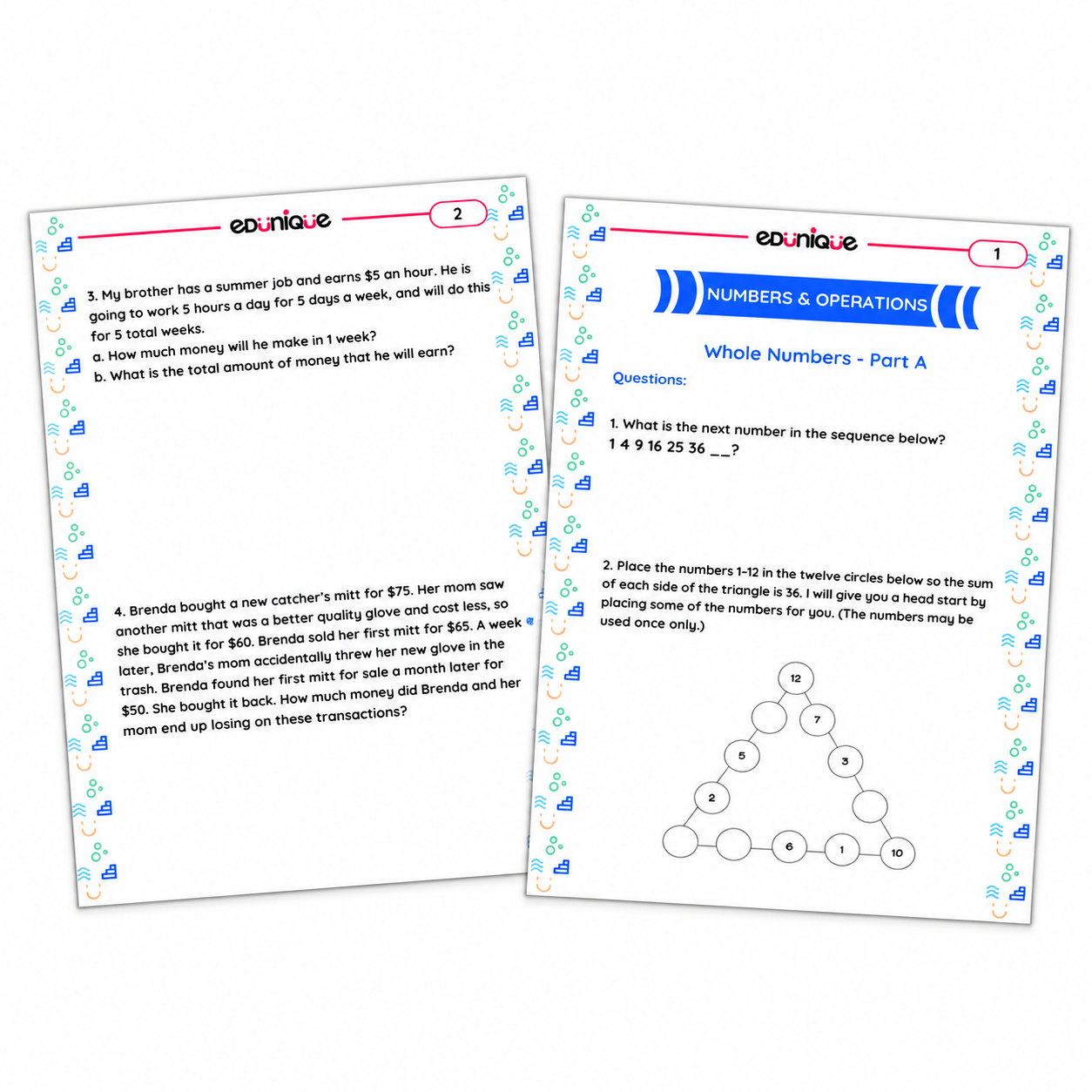
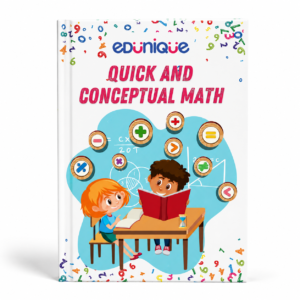
- Mathematics Book(s) — level-wise content covering core mathematical concepts with graded exercises, worked examples, mental maths practice, and higher-order problem-solving
- Reasoning and maths integration — the two disciplines reinforce each other: stronger logical thinking improves mathematical problem-solving, and mathematical rigour strengthens analytical reasoning
- Competitive exam readiness — the combination directly addresses the reasoning and quantitative sections of exams like CAT, CLAT, SAT, and school olympiads
- Independent self-study design — students can work through all three books on their own, at their own pace, without requiring a tutor
- Real-world problem framing — exercises in both books use relatable scenarios that show why these skills matter beyond the classroom
- Structured progression — content is sequenced to build from foundations to advanced application across both disciplines
- Complete value set — buying as a set provides better value than purchasing individual titles separately
Q1. Who is this set designed for?
The set is best suited for students from Class 6 upwards, college students, and young professionals who want to strengthen both their analytical and mathematical thinking. Motivated upper-primary students can also benefit with some parental guidance.
Q2. Do I need to use both books together, or can they be used independently?
Each book works independently — they can be read in any order or simultaneously. However, students who work through both together often find that the critical thinking frameworks they develop start to change how they approach mathematical problems, and vice versa.
Q3. Will this help with CAT, CLAT, or other competitive exam preparation?
Yes. The Quantitative Aptitude, Logical Reasoning, and Data Interpretation sections of CAT; the Legal Reasoning and Logical Reasoning sections of CLAT; and the Math and Evidence-Based Reading sections of SAT all draw directly on the skills developed across this set.
Q4. Is there any overlap between the Critical Thinking Book and the Mathematics books?
There is intentional complementarity rather than overlap. The Critical Thinking Book focuses on reasoning, argument analysis, and bias — verbal and logical skills. The Mathematics books focus on numerical reasoning, calculation, and problem-solving. Together they cover both dimensions of analytical ability.