Some Children Learn to Read. Others Learn to Decode.
Here’s the difference — a child who has memorised common words can read familiar text. A child who has learned phonics can read any word they encounter, including words they’ve never seen before.
That’s the real goal of early reading instruction: not a sight-word bank, but a system. The ability to look at an unfamiliar word, work out its sounds, and read it. The ability to hear a word and know how to spell it.
Phonics is that system. And when it’s taught well — in the right sequence, with enough practice at each stage — reading fluency follows naturally.
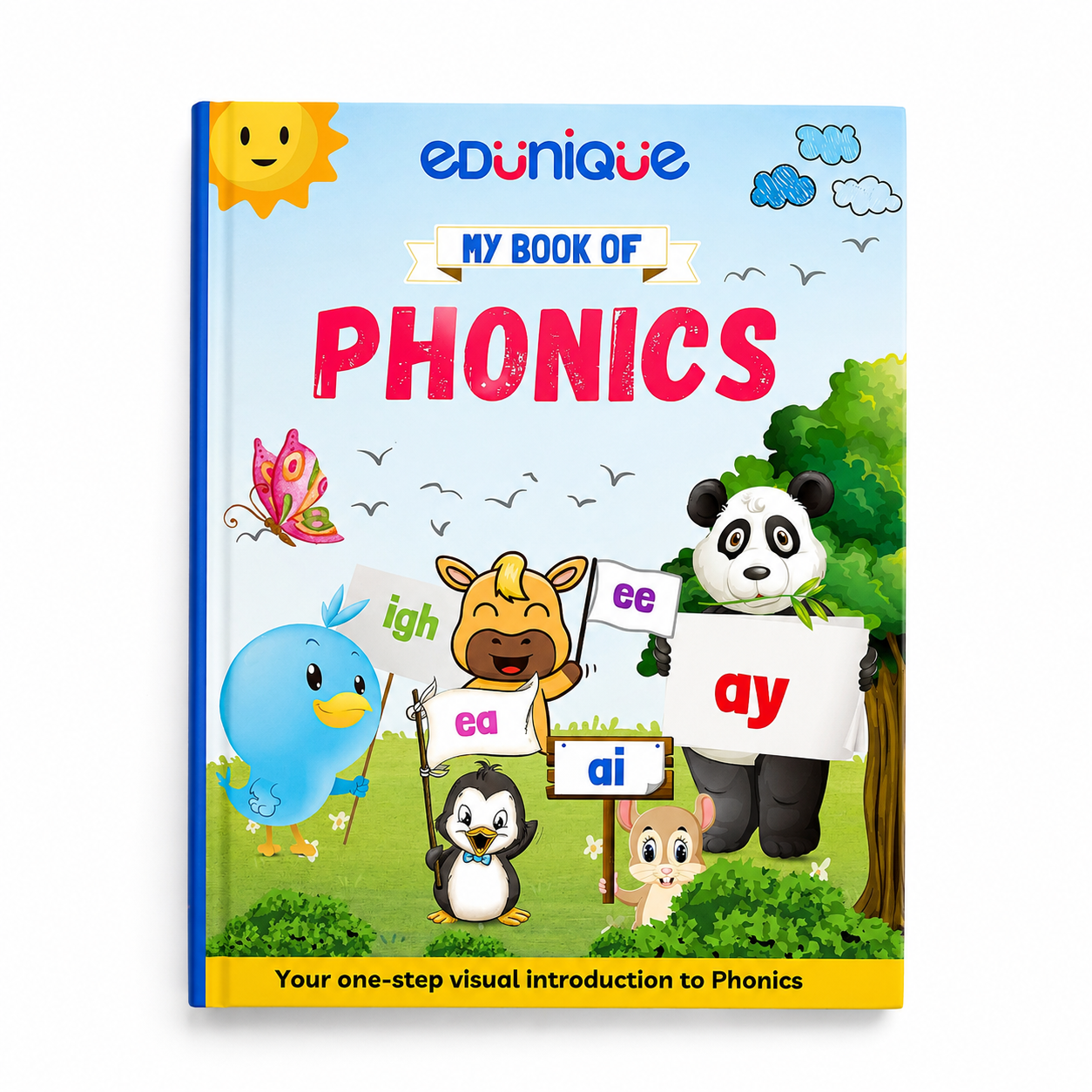
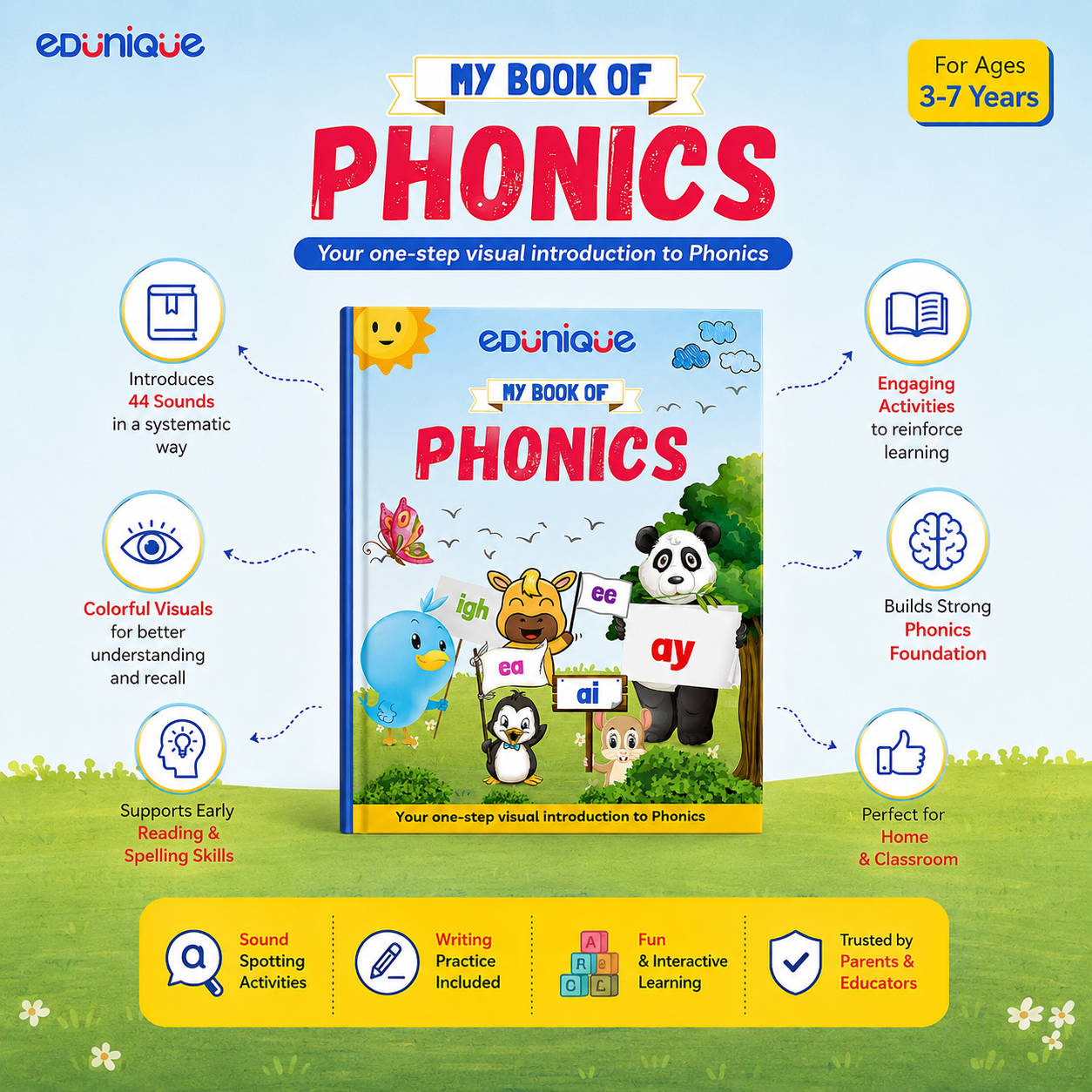
The EduNique Phonics Book (6 Levels) was built to teach phonics the right way. Each level builds on the last, introducing new sounds and patterns only after the previous ones are secure. By the time a child completes all six levels, they have a complete phonics foundation — and the reading independence that comes with it.
What’s Inside the Phonics Book (Complete 6 Levels)
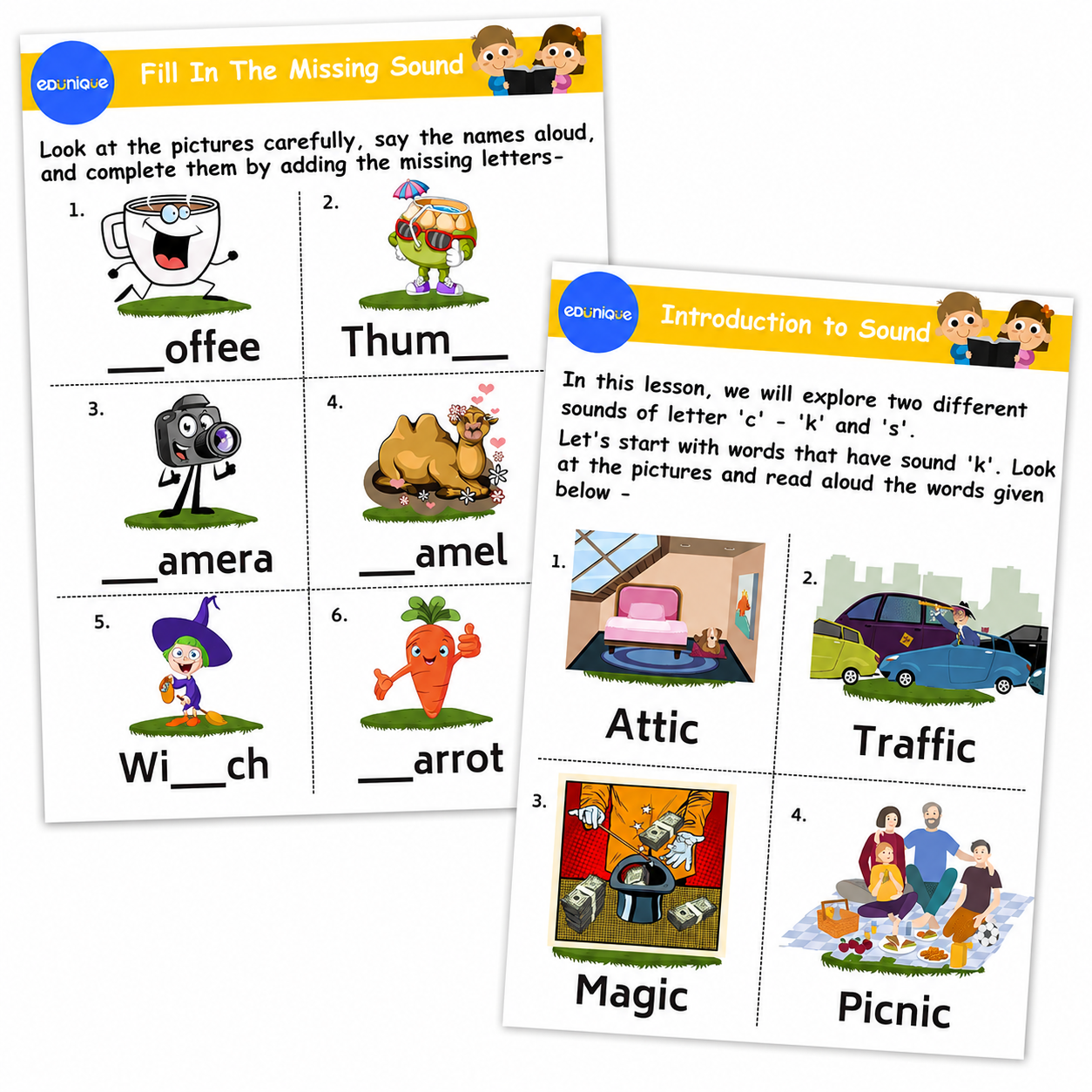
- Level 1 — Alphabet sounds: individual letter sounds (not letter names), with picture-word associations and tracing practice
- Level 2 — CVC words: three-letter consonant-vowel-consonant words, blending sounds together to form and read simple words
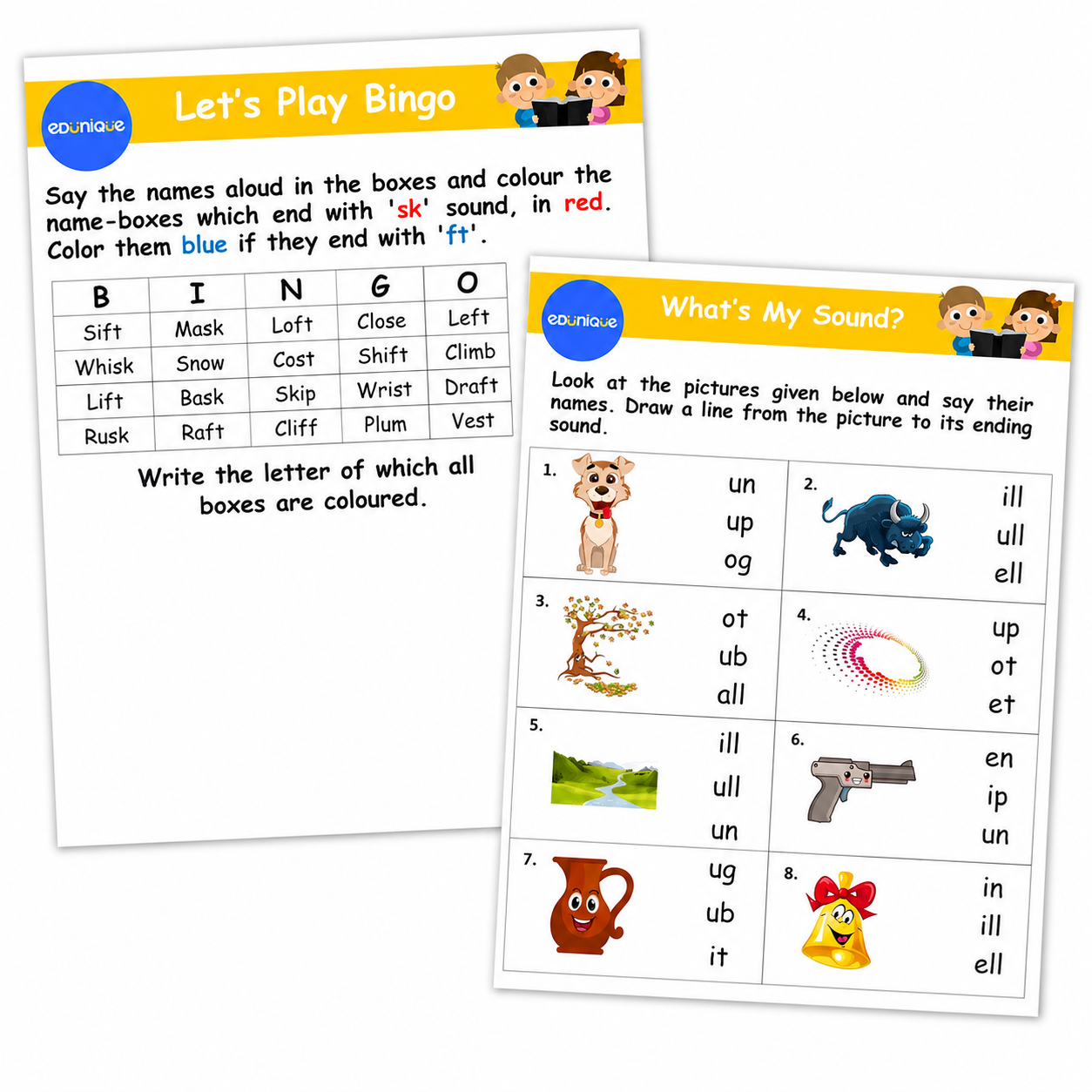
- Level 3 — Consonant blends and digraphs: two-letter combinations (bl, cr, sh, th, etc.) that produce new sounds
- Level 4 — Long vowel patterns: silent-e words, vowel pairs, and the rules that govern when vowels say their name
- Level 5 — Complex vowel patterns and diphthongs: the less predictable but frequently occurring vowel combinations
- Level 6 — Multi-syllable words and advanced patterns: breaking longer words into decodable chunks and reading with fluency
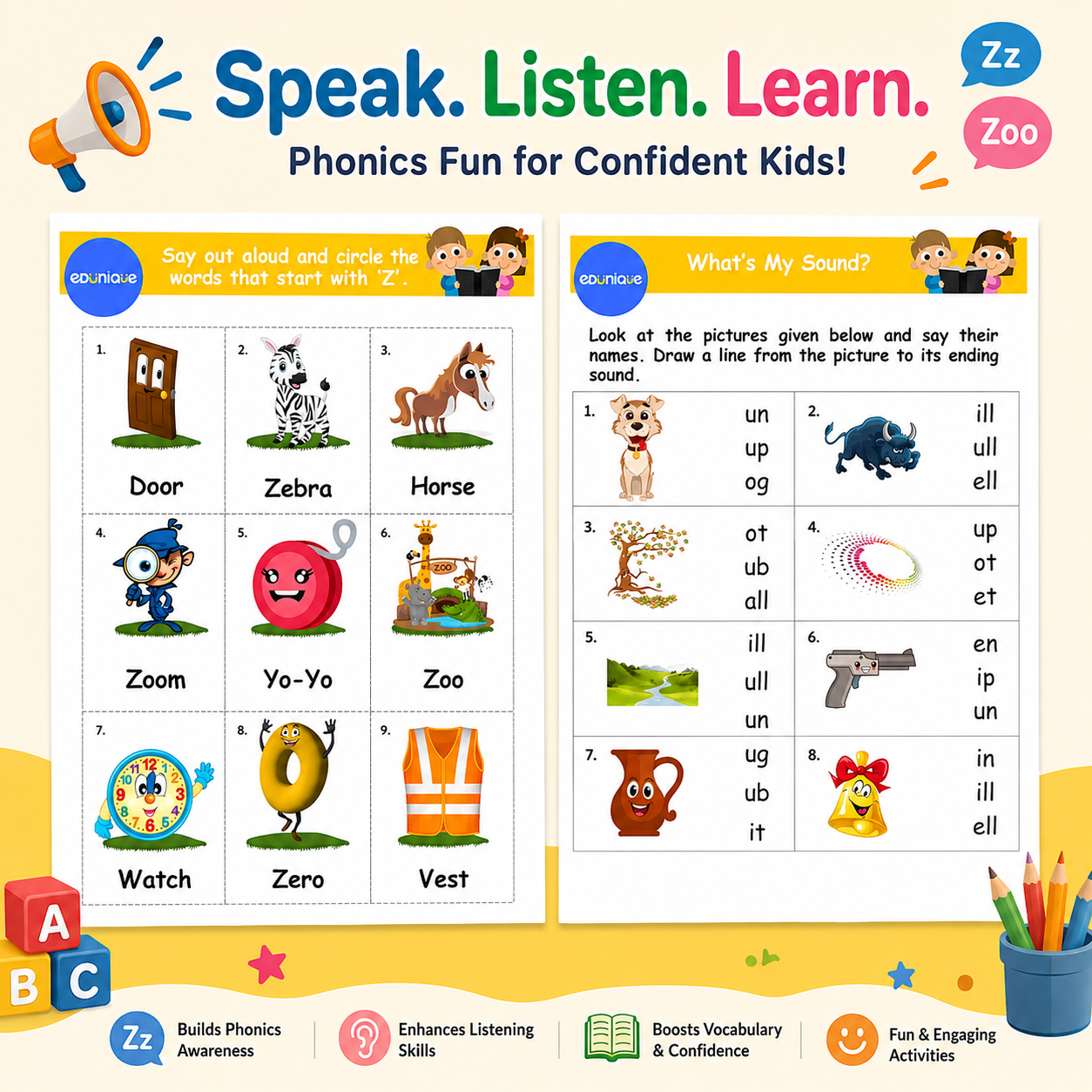
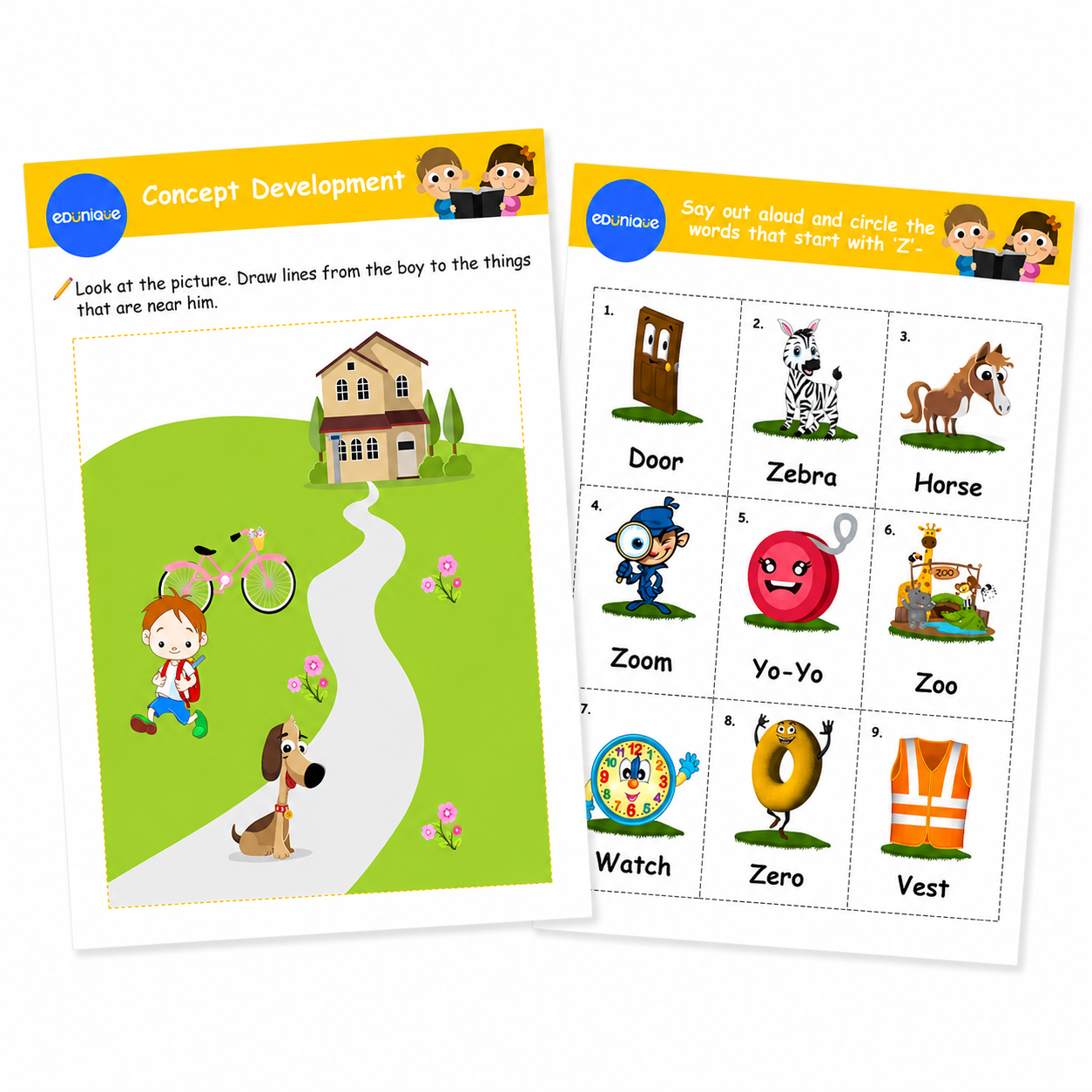
- Listening and speaking activities — phonics is a sound-based skill; exercises reinforce the connection between heard and written sounds
- Decodable word lists and reading passages — applying phonics knowledge to actual reading at each level
Q1. What age is this set suitable for?
The six-level set is designed for children aged approximately 3 to 8. Level 1 is appropriate for pre-primary learners (age 3–4), and Level 6 typically suits children in Class 2–3 (age 7–8). The pace through levels depends on the individual child.
Q2. Does my child need to know the alphabet before starting Level 1?
Some familiarity with letter shapes is helpful but not required. Level 1 begins with letter sounds from the beginning, assuming no prior phonics instruction. A child who can recognise letters but doesn’t yet know their sounds is the ideal starting point for Level 1.
Q3. Can this be used for home learning, or is it designed for classroom use?
It’s fully designed for home use. Parents can work through the activities with their children without any teaching background. Each level is self-contained with clear instructions, activities, and practice exercises.
Q4. How is phonics different from the way reading was traditionally taught?
Traditional methods often rely on sight words — memorising the appearance of whole words. Phonics teaches the sound-to-letter system, so children can decode any word they encounter. Research consistently shows phonics produces stronger, more independent readers — particularly for children who find reading difficult.